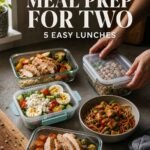
High protein meal prep for two works best as a flexible system, not ten identical containers. This plan turns five lunch ideas into ten weekday servings while letting each person adjust portions, sauces, and sides. Prep six lunches on Sunday, refresh four on Wednesday, and use the same core ingredients in different formats so the week stays practical.
This is a planning guide rather than a one-size-fits-all nutrition prescription. Protein needs vary, and packaged ingredients differ by brand. Use the portion method below, then calculate exact nutrition from the products and quantities you actually use.
The quick plan
- Who it serves: two adults for five weekday lunches.
- Prep rhythm: one main session on Sunday and a short refresh on Wednesday.
- Default approach: protein-rich whole foods; no protein powder required.
- Best for: couples or roommates who want the same meal base but not necessarily the same portion.
- Food-safety rule: refrigerate only the portions you will eat within three to four days; freeze or prepare later portions midweek.
If you are new to batch cooking, start with the broader meal prep for two guide. It covers containers, planning, and portion basics before you add a protein-focused goal.
7-day high-protein meal-prep schedule for two
The schedule below produces ten weekday lunches. The weekend is reserved for shopping, prep, leftovers, or eating out, so the plan does not create unnecessary food waste.
| Day | Lunch for two | Prep and storage note |
|---|---|---|
| Monday | Lemon chicken grain bowls | Refrigerate after Sunday prep; keep sauce separate. |
| Tuesday | Turkey hummus crunch wraps | Store filling separately and assemble before eating. |
| Wednesday | Tuna white bean salad boxes | Pack greens or crackers separately to protect texture. |
| Thursday | Cottage cheese egg boxes | Prepare during the Wednesday refresh. |
| Friday | Sesame tofu edamame bowls | Prepare Wednesday or freeze a compatible cooked base earlier. |
| Saturday | Leftover or freezer lunch | Use a labeled frozen portion instead of holding Sunday food all week. |
| Sunday | Shop and prep | Cook three lunch pairs for Monday through Wednesday. |
Why two prep sessions beat one giant batch
A Sunday-only plan looks efficient, but it can leave Friday lunch outside the recommended refrigerated window for cooked leftovers. Splitting the work keeps later meals fresher and reduces the temptation to abandon the plan by Thursday.
On Sunday, prepare six lunches for Monday through Wednesday. On Wednesday evening, make the remaining four lunches in a shorter session. If a midweek session is impossible, freeze the later cooked portions promptly and thaw them in the refrigerator. Our freezer meals for two guide explains how to label, portion, and rotate frozen meals.
Five lunch formulas that do not feel repetitive
1. Lemon chicken grain bowls
Build each bowl with cooked chicken, a grain such as brown rice or quinoa, roasted vegetables, and a lemon-herb yogurt sauce. Store the sauce in a small leak-resistant container so the grain and vegetables keep their texture. Change the portion size by adding more chicken or grain to one bowl rather than cooking a separate meal.
For a different format using similar ingredients, use our Southwest chicken wrap as inspiration. Keep the recipe’s tested ingredients and directions together; do not transfer nutrition numbers between different portions.
2. Turkey hummus crunch wraps
Layer sliced turkey, hummus, shredded cabbage or romaine, cucumber, and tomato in a whole-grain tortilla. For the best texture, pack the tortilla, filling, and watery vegetables separately, then assemble at lunch. Choose a turkey brand by reading the label for protein and sodium rather than assuming every package is equivalent.
3. Tuna white bean salad boxes
Combine drained tuna with rinsed white beans, chopped celery, herbs, lemon, and a small amount of olive oil or yogurt-based dressing. Pack it with vegetables, fruit, or whole-grain crackers. This lunch requires little cooking and gives the Wednesday box a different temperature and texture from the hot bowls.
Anyone who is pregnant, breastfeeding, feeding young children, or concerned about mercury should follow current FDA and EPA fish advice when choosing tuna type and frequency.
4. Cottage cheese egg boxes
Pair a portion of cottage cheese egg bake with crunchy vegetables, berries, and a whole-grain side. This works especially well when one person prefers a lighter lunch: keep the egg bake consistent and adjust the sides. Use our cottage cheese egg bake for the complete method and serving guidance.
5. Sesame tofu edamame bowls
Use pressed, baked tofu with shelled edamame, rice, shredded carrots, cucumber, and sesame-ginger dressing. Pack cucumber and dressing separately if you prefer a firmer bowl. For a larger appetite, increase tofu or edamame first; for a smaller portion, keep the same vegetable volume and reduce the grain.
Shared grocery framework for ten lunches
Shop by component instead of buying a separate ingredient list for every meal. The goal is enough variety to prevent boredom with enough overlap to control cost. Quantities depend on appetite, the exact recipes selected, and whether you already have pantry staples.
| Category | What to buy | Used in |
|---|---|---|
| Primary proteins | Chicken, sliced turkey, canned tuna, cottage cheese and eggs, tofu, frozen shelled edamame | Five distinct lunch pairs |
| Flexible bases | Brown rice or quinoa, whole-grain tortillas, whole-grain crackers | Bowls, wraps, salad boxes |
| Vegetables | Broccoli or peppers, cabbage or romaine, cucumber, carrots, celery, tomatoes | Roasted sides and fresh crunch |
| Flavor builders | Lemons, hummus, plain Greek yogurt, herbs, sesame-ginger dressing ingredients | Sauces and dressings |
| Easy sides | Fruit, berries, or another ready-to-pack produce choice | Fill gaps without extra cooking |
Before shopping, check the refrigerator, freezer, and pantry, then convert this framework into quantities with the meal-prep grocery list for two. If price is the main constraint, use the substitution method in our budget meal plan for two: choose one affordable protein, one sale vegetable, and one pantry base before adding extras.
Sunday prep: six lunches in one focused session
- Start the grain. Cook the amount required for Monday’s bowls and any Wednesday-refresh bowls.
- Cook the chicken safely. Season, cook, and verify 165°F in the thickest part with a food thermometer.
- Roast sturdy vegetables. Use one sheet pan and keep fresh vegetables raw for wraps and salad boxes.
- Mix two sauces. Make lemon-herb yogurt sauce and a second dressing; store both separately.
- Prepare the no-cook components. Drain and rinse beans, chop celery, and portion the tuna salad ingredients.
- Pack Monday through Wednesday. Cool cooked foods promptly in shallow containers before refrigerating. Keep crunchy and wet ingredients apart.
Wednesday refresh: four lunches without starting over
- Bake or portion the cottage cheese egg dish.
- Bake the pressed tofu while reheating or finishing the grain.
- Steam or thaw shelled edamame according to the package directions.
- Chop fresh vegetables, portion sauces, and label Thursday and Friday containers.
The refresh is intentionally shorter because the grain, sauces, and washed produce can overlap with Sunday prep. If quality drops before Friday, shorten the advance window next time rather than forcing the schedule.
How to portion the same meal for two different appetites
Equal containers do not require equal portions. Build each lunch from four components and adjust them independently:
- Protein anchor: chicken, turkey, tuna and beans, egg bake, or tofu and edamame.
- Produce: fill a generous share of the container with cooked or raw vegetables.
- Energy base: rice, quinoa, tortilla, crackers, or fruit.
- Flavor: sauce, dressing, herbs, pickles, or citrus.
Label containers with initials. Increase the protein anchor or energy base for the person who needs more food, while keeping the flavor and vegetable preparation shared. This avoids the common mistake of treating “for two” as two identical nutritional prescriptions.
How to estimate protein accurately
Do not copy a protein number from a similar recipe. Weigh the ingredients you use, record the exact packaged brands, calculate the full batch from the label or USDA FoodData Central, and divide by the finished number of servings. Treat the result as an estimate because brands and portion sizes vary.
If you do not want to calculate numbers, use a visible protein anchor in every lunch and choose foods that naturally contribute protein. This plan does not require protein powder; whole-food ingredients make the meals easier to share and adapt.
Keep the meals interesting without buying more food
Change at least two elements from one day to the next: format, temperature, sauce, texture, or base. Chicken can become a warm bowl on Monday and a chilled wrap later. The same cucumber and carrots can be roasted in one meal and served raw in another. A lemon-yogurt sauce and sesame dressing make overlapping ingredients feel unrelated without doubling the grocery list.
Storage and food safety
Keep the refrigerator at 40°F or below, refrigerate perishable food within two hours, and use most cooked leftovers within three to four days. Reheat leftovers to 165°F. These limits are why this plan uses a Wednesday refresh or the freezer instead of keeping every Sunday-cooked lunch in the refrigerator until Friday.
Use shallow, sealed containers for faster cooling, label them with the prep date, and carry cold lunches with adequate cold sources if they will not go directly into a refrigerator. See the full guide to how long meal prep lasts in the fridge and the official USDA leftovers guidance.
Frequently asked questions
Can I meal-prep all five lunches on Sunday?
You can prepare components on Sunday, but cooked food intended for later in the week should be frozen promptly or prepared during a midweek refresh. Most cooked leftovers should not remain refrigerated for more than three to four days.
Does this plan work without protein powder?
Yes. Chicken, turkey, tuna, beans, eggs, cottage cheese, tofu, and edamame are the protein anchors. Protein powder is optional and is not needed for the five lunch formulas.
What if one person eats more than the other?
Keep components separate until packing. Increase the protein or grain for the larger portion and use the same vegetables, sauce, and cooking process for both people.
Can I make the plan vegetarian?
Yes. Replace the meat and fish lunches with tofu, tempeh, lentils, beans, eggs, Greek yogurt, cottage cheese, or combinations such as tofu plus edamame. Recalculate portions and estimated nutrition after substitutions.
How many containers do two people need?
Six main containers are enough for the Sunday batch, plus four for the Wednesday refresh. Small sauce containers help protect texture. You do not need ten matching containers if you wash and reuse the first set midweek.
The bottom line
The strongest high-protein meal prep for two is a repeatable system: five different lunch formats, shared ingredients, adjustable portions, and a safe two-session schedule. Start with the Sunday six, make the Wednesday four, then keep only the combinations both people would genuinely eat again.