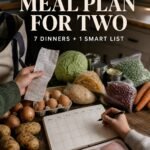
A useful budget meal plan for two repeats ingredients, not complete meals. This seven-dinner framework uses chicken, beans, eggs, seasonal vegetables, rice, tortillas, and pasta in different combinations so fewer half-used packages end up in the trash.
There is no honest nationwide promise that this menu costs exactly $40, $50, or $60. Grocery prices vary by store, date, location, brand, and what is already in your pantry. The better goal is to set a local spending cap and calculate the cost per portion before checking out.
The seven-dinner plan
| Day | Dinner for two | Ingredients reused later | Planned extra |
|---|---|---|---|
| Monday | Sheet-pan chicken, carrots, and potatoes | Chicken, carrots, onion | Cook two extra chicken portions |
| Tuesday | Chicken and black bean rice bowls | Chicken, beans, rice, slaw | Save half the beans |
| Wednesday | Tomato-lentil pasta with spinach | Tomato, onion, spinach | Make four servings; freeze two |
| Thursday | Egg and vegetable fried rice | Rice, eggs, carrots, spinach | Use cold rice from Tuesday |
| Friday | Crispy bean and slaw tacos | Beans, tortillas, slaw | Mix only the slaw needed tonight |
| Saturday | Loaded baked potatoes with yogurt sauce | Potatoes, yogurt, scallions | Use remaining vegetables as toppings |
| Sunday | Clean-out-the-fridge frittata + toast | Eggs, spinach, onion, odds and ends | Refrigerate only planned leftovers |
This is a modular plan. If your household dislikes lentils, use an additional can of beans. If chicken is expensive, compare the per-pound price of thighs, breasts, and a store-roasted chicken while considering edible yield and sodium preferences.
For breakfasts and lunches in the same week, use the complete meal prep for two plan instead of doubling this dinner list.
The smart grocery framework
Produce
- 1 bag carrots, about 1 pound
- 4 medium potatoes plus 2 large baking potatoes
- 2 medium onions
- 1 small head of cabbage or one 8- to 10-ounce slaw mix
- 1 bag spinach, about 5 ounces
- 1 bunch scallions
- 1 seasonal topping vegetable, such as bell pepper or tomato
- 1 lemon or lime
- 1 loaf of bread, if not already on hand
Protein and dairy
- About 1½ pounds chicken
- 1 dozen eggs
- 2 cans black beans
- 1 bag dry lentils or 1 can lentils
- 1 tub plain yogurt
- Optional small block of cheese
Grains and pantry items
- Rice
- Pasta
- Tortillas
- 1 can crushed tomatoes
- Oil
- Vinegar
- Salt and black pepper
- Garlic, chili powder, cumin, Italian seasoning, and any preferred hot sauce
Before shopping, use the meal prep grocery list for two to count what is already in the refrigerator, freezer, and pantry.
How to set a realistic budget
Start with the amount you can spend for the meals in this plan. Then divide it by 14 dinner portions:
Dinner budget ÷ 14 = target cost per dinner serving
If your seven-dinner budget is $70, for example, the target is $5 per dinner serving. That is a planning target, not a guarantee. Pantry ingredients are not free, so assign them a reasonable partial cost when comparing this plan with takeout or meal delivery.
Keep a running estimate while building the cart. If the total is high, change one large cost driver instead of stripping flavor from every meal.
The swaps that make the biggest difference
Swap the protein, not the whole plan
Replace chicken with the best-value protein available that week. Bone-in chicken can cost less but produces less edible meat and may take longer to cook. Beans and lentils are useful, but they do not have to replace every meat meal.
Buy the useful package size
A larger package is not a bargain if half spoils. Compare unit price, then check whether the extra can be frozen or used in next week’s plan.
Choose seasonal or frozen vegetables
Frozen spinach, broccoli, peas, or mixed vegetables can be economical and reduce prep. Buy plain vegetables without sauce when you want control over seasoning and use.
Use store brands selectively
Staples such as rice, pasta, canned tomatoes, and beans often have straightforward store-brand substitutes. Compare ingredient lists and package sizes, not only the shelf price.
Keep one low-effort dinner
The baked potato night is intentionally simple. A budget plan that requires seven ambitious cooking sessions can lead to an expensive last-minute order when energy runs out.
Prep once, reuse carefully
On Monday, cook four portions of chicken: two for dinner and two for Tuesday’s bowls. On Tuesday, make enough rice for the bowls and Thursday’s fried rice. Cool the extra rice promptly in shallow containers and refrigerate it.
On Wednesday, prepare four portions of tomato-lentil pasta. Serve two and freeze two once cooled, unless they are intentionally scheduled within the refrigerated-leftover window. This creates a future dinner rather than a fourth night of the same meal.
Keep taco slaw undressed until Friday, and do not cut every vegetable on shopping day. Whole produce may keep quality longer than chopped produce.
Ways to prevent two-person food waste
- Choose loose produce when a full bag is too much.
- Freeze tortillas with parchment between small stacks.
- Portion bread before freezing so you can remove two slices at a time.
- Label leftover chicken, rice, and pasta with the preparation date.
- Put one flexible dinner on the calendar to use open ingredients.
- Review last week’s unused food before repeating the same quantity.
USDA MyPlate recommends checking food on hand, writing down meals and recipes, planning for leftovers, and building a grocery list. Those steps matter even more in a two-person home, where a single forgotten package can erase the savings from several low-cost meals.
Frequently asked questions
What is the cheapest type of meal for two?
Meals built around a low-cost staple—rice, pasta, potatoes, beans, lentils, or eggs—often cost less than meat-centered dishes. The actual cheapest choice depends on local prices and what you already own.
Is it cheaper to cook for two or buy individual meals?
Home cooking is often less expensive per serving when ingredients are fully used. Waste, specialty ingredients, utilities, and time still count. Use the meal prep vs meal delivery for two calculator for a more complete comparison.
How do I avoid eating the same leftovers all week?
Reuse components in a new format. Chicken becomes a sheet-pan dinner and then a rice bowl; beans become a bowl topping and later a taco filling; spinach appears in pasta, fried rice, and frittata.
Should I shop weekly or more often?
One main shop plus a small produce refill can work well for two. The best schedule is the one that prevents impulse trips without letting delicate food spoil.
The bottom line
A budget meal plan for two works when every ingredient has a clear job and the schedule includes one easy night. Price the plan locally, cook intentional extras, and freeze them before they become forgotten leftovers.
Source note
- USDA MyPlate, “Plan Your Weekly Meals”: https://www.myplate.gov/eathealthy/budget/budget-weekly-meals