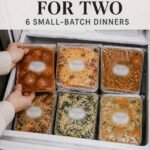
Freezer meals for two work best when each package holds the amount you will eat together at one sitting. Start with two backup dinners, label them clearly, and add fresh sides when serving. This guide explains portioning, packaging and reheating; use a complete recipe for the cooking quantities and method.
What are freezer meals for two?
Freezer meals for two are prepared dishes divided into two-person packages for a later lunch or dinner. They may be cooked meals ready to reheat or uncooked dishes with specific cooking instructions. This guide focuses on cooked leftovers: cool them promptly, freeze manageable portions, and label how to thaw and reheat each dish safely.
Meal ideas · Copyable freezer label · Shopping checklist · Reheating
Six meal ideas and how to package them
Choose a complete recipe you enjoy, then use its finished serving yield to portion it. The ideas below are serving formats, not six standalone recipes with interchangeable cook times.
| Meal format | Pack for two | Add at serving |
|---|---|---|
| Meatballs in tomato sauce | Two recipe servings with their sauce | Freshly cooked pasta or bread |
| Cooked chicken-and-bean enchilada bake | Two cooked portions in a shallow freezer-safe container | Slaw, avocado or herbs |
| Lentil vegetable soup | Two measured recipe servings with headspace | Lemon and toast |
| Stuffed-pepper filling | Two portions of cooked filling | Freshly cooked rice if stored separately |
| Spinach pasta bake | Two cooked portions with sauce | Fresh salad |
| Chicken vegetable soup base | Two servings of cooked broth, chicken and vegetables | Freshly cooked rice or noodles |
What to expect after thawing
Freezing changes texture. Saucy portions can be easier to reheat without drying, while crisp toppings are best added afterward. Cooked pasta can soften; keep noodles separate from soup when you want more control over the final texture. A freezer-safe container is not necessarily oven-safe.
How to portion a batch for two
- Check the recipe’s stated servings and finished yield. For a four-serving recipe, reserve two servings for the first meal and package the other two together.
- For a six-serving batch, make three two-serving packages. Dividing by weight is useful for soups and mixed dishes; distribute meatballs or other pieces evenly before dividing sauce.
- Choose a shallow container that fits the portion. Leave the manufacturer’s recommended expansion space for liquids.
- Label each package before freezing. Keep newer meals behind older ones and maintain a short freezer inventory.
Start with the meal-prep-for-two guide for your weekly structure. For cooked chicken portions, use the Costco rotisserie chicken meal plan.
A shopping checklist that matches your recipes
Select two complete recipes before shopping. Copy each ingredient quantity into a combined list, add matching ingredients together, then subtract what you already have. This avoids buying a generic freezer haul that does not make complete meals.
| Ingredient | Recipe A needs | Recipe B needs | Already have | Buy |
|---|---|---|---|---|
| Protein or beans | ____ | ____ | ____ | ____ |
| Vegetables | ____ | ____ | ____ | ____ |
| Sauce or broth | ____ | ____ | ____ | ____ |
| Grain or pasta | ____ | ____ | ____ | ____ |
| Fresh serving extras | ____ | ____ | ____ | ____ |
Keep dry and cooked weights separate when combining quantities. Add freezer-safe containers and labels only if you need them; container capacity should follow the portion, not the other way around.
Copyable freezer label
Copy or print this block for each cooked meal. Fill in the recipe-specific method rather than using an arbitrary universal heating time.
Meal: ____________________
Servings: 2
Cooked on: __________
Frozen on: __________
Thaw: Refrigerator
Reheat using: ____________________
Temperature: 165°F throughout
Add fresh: ____________________
Recipe / ingredients: ____________________
Cooling and storage
Refrigerate cooked food promptly in shallow containers within 2 hours, or 1 hour above 90°F. Keep the refrigerator at 40°F or below. Use refrigerated leftovers within 3–4 days or freeze them; earlier freezing generally protects quality. A frozen meal does not become safe if it was mishandled before freezing. See USDA leftover guidance.
Keep the freezer at 0°F or below. Published freezer-storage windows concern quality when food remains continuously frozen. The FoodSafety.gov storage chart lists soups and stews at 2–3 months and cooked meat or poultry at 2–6 months for freezer quality. These are general categories, not measured shelf lives for the six meal ideas above.
How to thaw and reheat cooked meals
- Thaw in the refrigerator on a tray to catch drips. Do not thaw perishable food on the counter.
- Transfer to suitable cookware; check whether the storage container tolerates the heating method and temperature change.
- Reheat with the recipe’s method. Stir soup and mixed dishes and turn or redistribute portions for even heating.
- Check several places with a thermometer. Cooked leftovers should reach 165°F throughout.
- Add fresh herbs, crisp vegetables and other finishing ingredients after heating.
Microwave- or cold-water-thawed food requires immediate cooking or reheating. Do not use these cooked-leftover instructions for raw freezer meal kits. See USDA reheating guidance.
Pro tips and variations
- For separate lunches, divide the same two-serving batch into two single-serving containers.
- Store rice or noodles separately from soup when you prefer adding them freshly cooked.
- Pack crunchy toppings separately; lettuce and cucumber are better fresh additions.
- Label ingredients and allergens when different household members will eat the meals.
Common questions
What size container do two servings need?
Use the finished volume of your chosen recipe. Two portions of soup and two portions of pasta bake can need different container shapes and capacities. Allow the appropriate headspace for the food and container.
Should I freeze a casserole before or after cooking?
Follow that recipe’s specific method. This guide describes cooked leftovers; an uncooked casserole needs its own cooking instructions, especially when it contains raw meat or eggs.
Can I freeze food on day four?
USDA allows refrigerated leftovers to be used or frozen within 3–4 days when handled correctly. Plan to freeze extras earlier rather than waiting until the end of that window.
Can I reheat straight from frozen?
Some dishes allow it, but the method, container and even heating matter. Follow a suitable recipe and verify 165°F throughout; do not assume that every meal takes the same extra time.
For refrigerator planning, read how long meal prep lasts in the fridge.